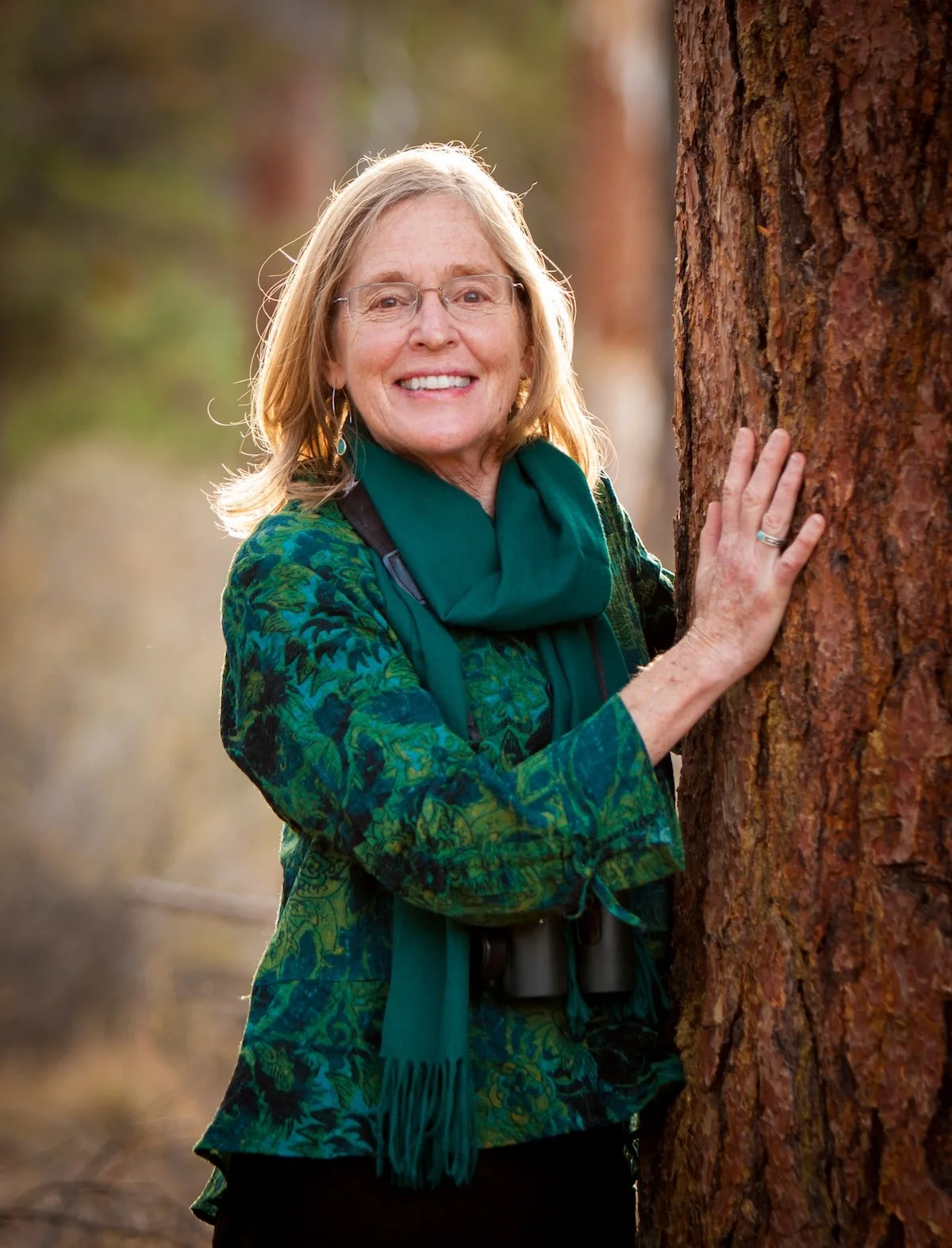
Marina Richie is a nature writer, environmentalist, board member of Greater Hells Canyon Council, and on leadership team of Bitterbrush Broads of Great Old Broads for Wilderness.
Why does wilderness matter to you?
What Wilderness means to me is refuge, haven, and home. I am grateful for all the brave people who saved these wilds as forever free of roads, free of machines, and free for the forests to grow into elders, to fall and to nurture the next generation. Yes, trees will burn in wildfires within a fire-shaped ecosystem, but Wilderness assures the standing dead and fallen trees can be home and habitat for a suite of life.
Today, with human-caused climate change ravaging the planet, Wilderness with the big “W” has become more essential than ever for capturing and storing carbon, sheltering headwaters, offering cooling microclimates within intact ecosystems, harboring threatened biodiversity, and serving as a place of wisdom and renewal.
Why does wilderness matter to your community?
My community of Bend, Oregon, is just west of the Three Sisters Wilderness in the Cascades—a wilderness that is safeguarding our drinking water, holding our snow in a heating climate, protecting wildlife habitat, and offering us close by wild trails in wild forests, by lakes, alpine meadows, and to summits—place for solitude, dark skies, and renewal of spirits. And to the east of us, also close, the Badlands Wilderness offers roadless solitude among some of the oldest western junipers in the world. We can go there in every season to step into a realm without motors, mechanized vehicles of any kind, and the peace of wild things. The Ochoco National Forest—a little bit farther away—havens Mill Creek and Bridge Creek Wilderness. Roadless areas like Lookout Mountain in the Ochocos are de facto wilderness with the little w—and our community values them as well—for wildness, solitude, wildlife corridors, climate refugia, and for recreation and spiritual well-being.
Share a story about a special experience you have had in wilderness.
By the Imnaha River, northeast Oregon within the Hells Canyon National Recreation area, just outside the boundary of the Eagle Cap Wilderness—all wild country:
Snap snap, SNAP! Then came the whooooooosh and a thud that shook us awake in the predawn, where we camped by the Imnaha River. Wes and I felt the reverberation from 150 yards away. Later, we found the Douglas-fir bridging a river channel near a beaver dam. The gunfire-like snaps were roots popping as the living tree tipped over and pulled up a wall of soil and roots 20 feet high, plus shaking loose a snaking section of the bank. Curious to look at the tree’s crown, we waded across the frigid waters to the other side (with the help of two beaver-chewed sticks for balance). Among a whorl of green needles, I spotted something bizarre brown fur, dainty hooves, and a skull. How had an elk calf ended up draped over a branch way up high in the fir? Did a cougar climb to the topmost branches with his or her prey?
What are your hopes for the future of wilderness?
Let’s keep dreaming and never give up.
Wild areas are far more than lines on the map. They are headwaters of drinking watersheds, strongholds for great forests capturing and storing massive amounts of carbon, havens for biodiversity, corridors for wildlife, and sanctuaries for the human spirit.
Draw a line….Trace the wilderness boundaries on a map with your finger. Celebrate Wilderness—the green protected places free from roads, logging, and all that is motorized. And then? Draw the lines around Oregon’s more than five million acres of roadless wilds on national forests. Name them. Agitate for them. In this decade anniversaries—60 for the Wilderness Act, 50 for Oregon Wild, and 40 for the Oregon Wilderness Act—there’s no better time than now to pull out the maps and dream big.
It’s never been easy to save Wilderness. To keep up our spirits and remember why it’s all worth it I believe in revitalizing our spirits often. Dip into the wilds near and far.