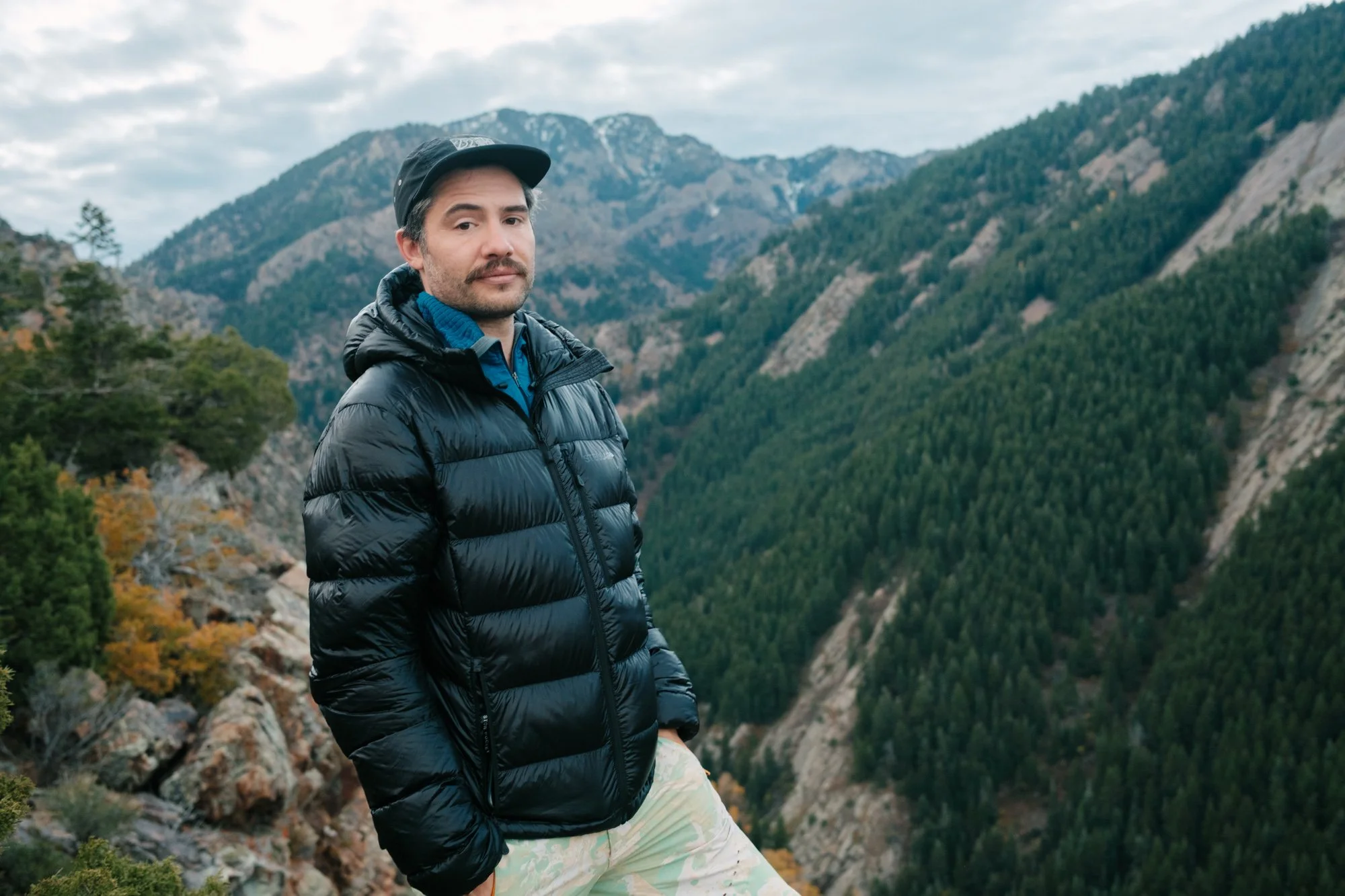
Jack Stauss is the Executive Director of Save Our Canyons.
Why does wilderness matter to you?
It is increasingly important to have places where nature and wild qualities thrive. These are not only necessary for the health of ecosystems, but also for the health of our soul as a human race. Wilderness and wild places allow us to connect with the elements that provide mental, physical, and emotional health. When I go into nature both within and outside a Wilderness boundary, I am able to refocus my energy. I remember important connections to people and place. I am able to face the unknown, and from that build empathy and humility that I carry with me always.
We need wilderness to remind us that the divide we have wedged between humans and nature is not the path forward. When we travel into nature we realize that we rely on all of the things that it provides for us and we must live within those boundaries.
Why does wilderness matter to your community?
My close friends and I live in this part of the intermountain West so we can experience wilderness. Without a robust, protected range, we would not be here. Lots of people live in certain parts of the country for exactly the same reason. As we build and develop wild places, we lose that character and in turn, the reason so many of our homes are amazing places to live. It matters to us because of the intrinsic value, the recreation value, and the ecosystem services like clean drinking water that it provides.
Share a story about a special experience you have had in wilderness.
Walking away from comforts of home and out into a wild place has completely shaped who I am. The sound of the wind through crags and rustling through aspens, the vast views from a lone peak, and the rush of water melting down from a season of snowpack accent my life.
When I was in my mid 20s I spent several nights camping alone in the Lone Peak Wilderness in my local Wasatch Range. I shivered alone in a tent as temperatures dropped below 10 degrees. In the day I climbed and skied toothy peaks, huge mountaineering objectives that left my nerves shot. But I was also left with fabulous memories of huge views, vast constellations of stars, and the quiet and solitude of that edge between our world and "the other." It was a trip that informed my graduate work and ultimately my career. It me to get better at my climbing and mountain skills. And it reinforced that wilderness needs no defense, just more people to defend it (Abbey).
What are your hopes for the future of wilderness and wild places?
I hope that in the coming years we can build support across the political divide to get back to an era of protection like we saw in the latter part of the 20th century. Environmental protection does not have to partisan. But they are making it an us vs. them issue and in that void of charged rhetoric we are flipping back to a development / industrialized nation. We are going to again have to restore and rehabilitate wild space. It is a critical moment to rebuild trust, coalitions, and create good management plans before we slip too far off the edge.
I also hope to see my homes: the Wasatch Range, The Green Mountains of Vermont, and the deserts of Utah protected in perpetuity. I will do everything in my power to fight for those places for my community today and for future generations to be able to experience what I have.